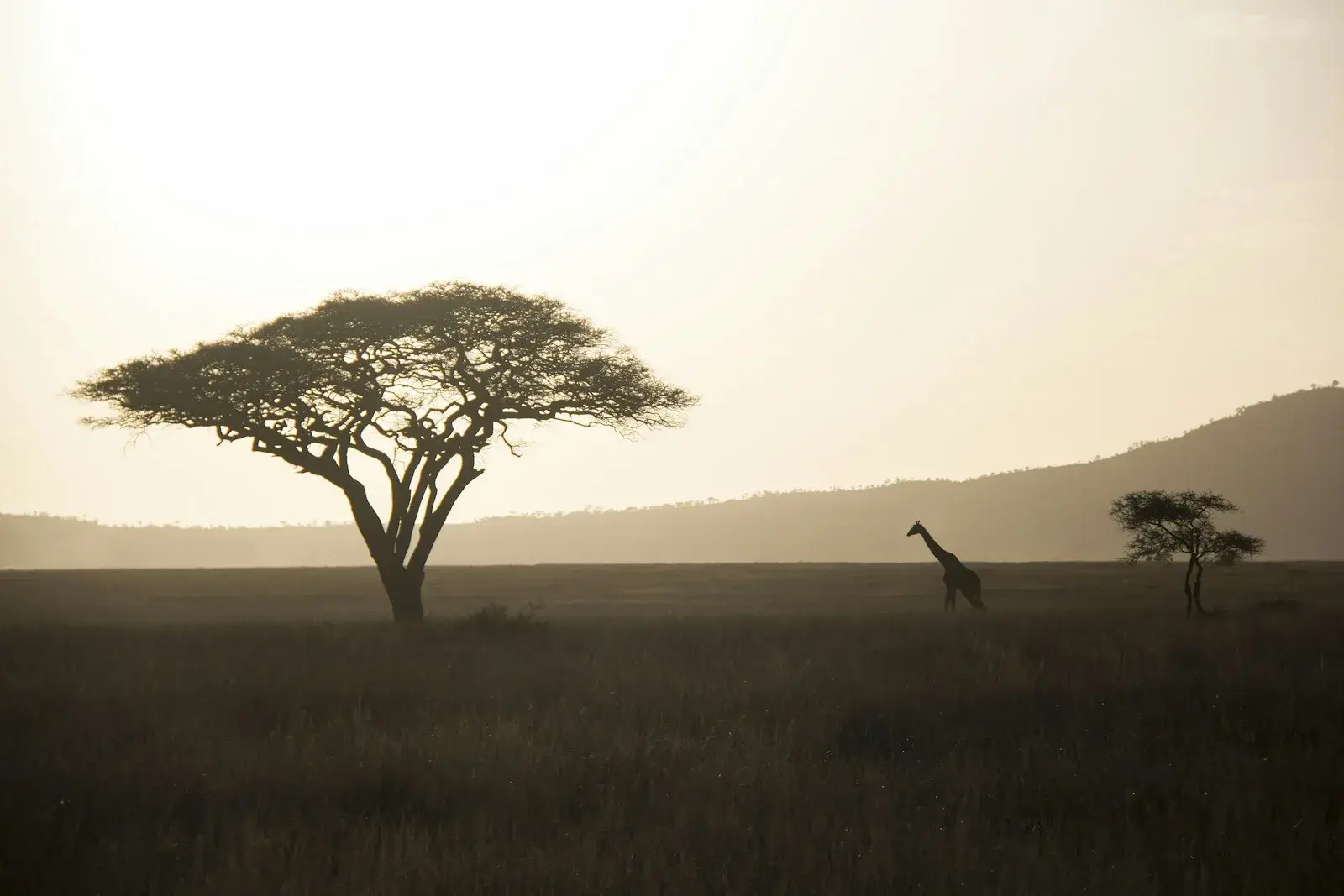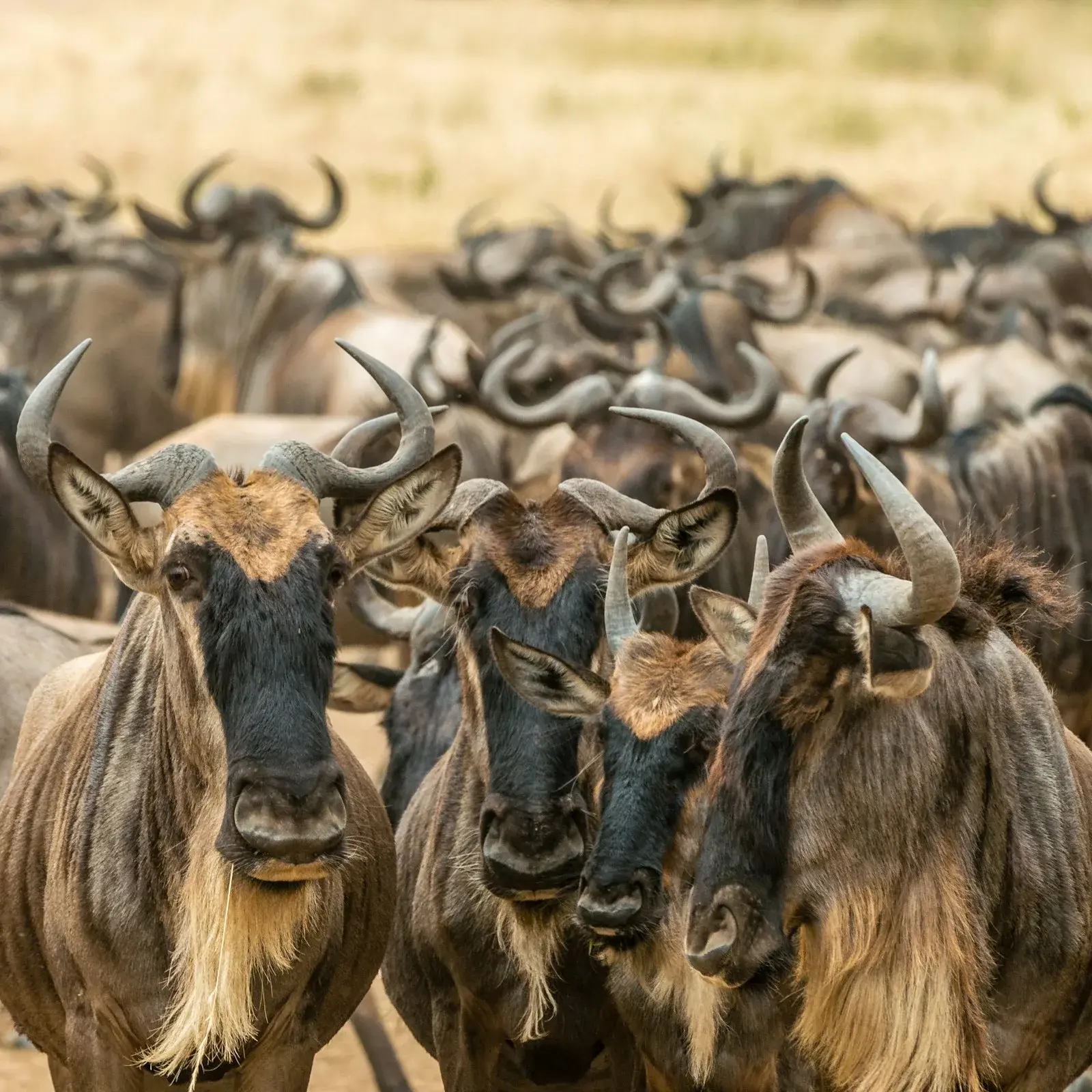
Millions of wildebeest thunder across the Mara River in one of nature's most spectacular events. Here's everything you need to know to witness it.
The Great Wildebeest Migration is widely regarded as one of the most extraordinary natural spectacles on the planet. Every year, more than 1.5 million wildebeest — joined by hundreds of thousands of zebra, Thomson's gazelle, and eland — embark on a relentless circular journey across the Serengeti-Mara ecosystem. Driven purely by rainfall and the search for fresh grass, this migration has shaped the landscape of East Africa for millennia, and witnessing it in person is a transformative experience that no film or photograph can fully replicate.
What Is the Great Wildebeest Migration?
The migration is not a single annual event — it is a year-round cycle. The wildebeest never stop moving; they simply follow the rains clockwise around the Serengeti-Mara ecosystem, crossing between Tanzania and Kenya in search of the freshest, most nutritious grass. In Kenya, the drama reaches its peak in the Masai Mara National Reserve, particularly at the Mara River, where the herds must cross crocodile-infested waters in one of nature's most visceral displays of survival.
The Annual Migration Calendar: When to Go
January – March (Calving Season, Southern Serengeti): Around 400,000 calves are born within a three-week window in the southern Serengeti, Tanzania. Nature's strategy is simple: overwhelm the predators with sheer numbers. Cheetah, lion, and hyena action is intense, and the sight of newborn wildebeest attempting to stand within minutes of birth is deeply moving.
April – June (Migration North Through Grumeti): As the southern Serengeti dries, the herds begin moving north through the western corridor and the Grumeti River area in Tanzania. This is a quieter period in the Mara, but the scenery is lush and accommodation prices are lower.
July – October (Kenya's Moment — Peak Migration): The herds arrive in the Masai Mara from July onwards. This is the period Kenya is famous for: repeated Mara River crossings, enormous herds stretching to the horizon, and the highest concentration of predators anywhere in Africa. August and September typically offer the most dramatic crossings.
November – December (Return South): The short rains signal the return journey south. The Mara quietens, but game viewing remains outstanding. Rates drop significantly, making this an excellent time for budget-conscious travellers who still want a world-class experience.
The Mara River Crossing — What to Expect
Nothing in nature quite matches the primal drama of a Mara River crossing. Thousands of wildebeest gather nervously at the bank, instinct battling fear. Then — triggered by some unseen signal — the first animal plunges in and the rest follow in a thundering mass. Nile crocodiles, some exceeding four metres, explode from the water. The air fills with dust and the sound of hooves, bleating, and splashing. Most animals make it across. Some don't. It is raw, unfiltered Africa.
Crossings can last minutes or hours. Sometimes the herds turn back, only to attempt the same crossing days later. Our Entamis guides know the most active crossing points and position vehicles for the best possible sightings — while always respecting the animals' space and the rules of the reserve.
Best Spots in the Masai Mara for Migration Viewing
- Mara Triangle (western section) — consistently the most dramatic crossings, less crowded than the central reserve
- Serena Crossing Point — one of the most reliable crossing sites near the Mara Serena Lodge
- Fig Tree Camp Area — excellent vantage points on the northern bank
- Purungat Bridge — a quieter crossing point favoured by experienced guides
- Lookout Hill — elevated views over the Mara plains for panoramic migration photography
How to Plan Your Great Migration Safari
- Book at least 6 months in advance for July–September travel — premium camps sell out quickly
- Stay for a minimum of 3 nights to maximise your chances of witnessing a river crossing
- Choose a camp near or on the Mara River for the best crossing access
- Pack layers — mornings in the Mara can be cool even in July
- Bring a quality camera with a long lens (300mm+) — distances to crossings can be significant
- Ask your guide to monitor the herds' movement the evening before for early-morning positioning
Is a Hot Air Balloon Safari Worth It?
Absolutely. Drifting silently over the Mara at sunrise, watching herds of wildebeest stretch to the horizon below you, is an experience that transcends ordinary safari. Balloon flights last approximately one hour and typically conclude with a champagne breakfast served in the bush. While the additional cost (usually $450–$600 per person) is significant, most guests say it is the single highlight of their entire Kenya trip. Our team can arrange balloon flights as an add-on to any of our Mara packages.
The Mara does not disappoint. Every game drive is different — the bush is alive with stories, and our guides know how to read every one of them.
Beyond the Migration: Year-Round Mara Wildlife
Even without the migration, the Masai Mara is one of Africa's finest game reserves. The Mara boasts the highest lion density in Africa, with prides of up to 30 individuals. Leopards are regularly spotted in the riverine forests. Cheetah sightings are frequent on the open plains. The Big Five — lion, leopard, elephant, buffalo, and rhinoceros — are all present year-round, alongside over 500 bird species. There is never a bad time to visit the Mara.
Ready to witness the world's greatest wildlife spectacle? Our Masai Mara safari packages are designed specifically to maximise your chances of experiencing the migration in all its glory. Contact the Entamis team today and let us plan your unforgettable Kenya adventure.
Ready to experience Kenya's wild places?
Let our expert team craft your perfect safari — tailor-made for you.